Atlas / field entry
Cellar, Kitchen, Garden: Three Ways In
A field guide to reading wine through the cellar, the kitchen and the garden, with notes on German-language wine writing and the annual vineyard cycle.
Wine is easiest to understand when it is followed through three places: the cellar where it is made, the kitchen where it is used, and the garden or vineyard where the raw material grows. Each place asks a different question of the same bottle. The cellar asks how it was handled, the kitchen asks what it can do beside food, and the garden asks what the season allowed.
Why does the cellar matter as much as the glass?
A tasting note describes what is in the glass. A cellar note describes how it got there. The two are not the same record, and the Sierra Foothills has spent a long time learning the difference.
Fermentation is the first decision point. A winemaker can run it in stainless steel, in concrete, in neutral oak or in new oak, and each choice changes how much of the fruit survives into the finished wine. Stainless preserves aromatics and keeps the texture lean. Oak adds oxygen exchange and, if the barrel is new, its own flavours of toast, vanilla and spice. Neutral oak, used for several vintages, mostly adds oxygen and very little flavour. That is why two Zinfandels from the same vineyard block can taste like different wines.
Elevage, the time after fermentation, is the second decision. A wine held in barrel for eighteen months will pick up more oxygen and more tannin integration than one bottled after six. A wine held in tank keeps its primary fruit but may not soften. Neither is automatically better. The question is what the site and the variety can carry.
There is a third tradition worth naming, because it is not only about wine. Solera systems, where a portion of an older liquid is blended into a younger one year after year, are used for vinegar and for spirits as well as for fortified wines. The method produces consistency rather than vintage variation, and it is one of the clearest examples of a cellar practice that crosses from drink to ingredient. German-language wine writing covers this ground in detail, including the annual vineyard cycle, barrel and steel élevage, and the solera method for balsamic vinegar, at Fass & Feld.
For a reader in the Sierra Foothills, the useful takeaway is that cellar language is not decoration. When a producer says a wine was aged in neutral oak, that is a statement about oxygen and texture, not about flavour. When a producer says it was fermented in concrete, that is a statement about temperature stability and roundness. These are checkable claims, and they are worth asking about at the tasting room counter.
What does the vineyard cycle actually look like?
The vineyard year is usually described in stages: dormancy, budbreak, flowering, fruit set, veraison, harvest, dormancy again. Each stage is a decision point, and each one can be lost.
Dormancy runs through winter. The vine is alive but not growing above ground. Pruning happens here, and pruning is where yield is set. A grower who leaves more buds gets more clusters and, usually, less concentration per cluster. A grower who leaves fewer buds gets less fruit and, usually, more intensity. Neither is a moral position. It is a calculation about the site.
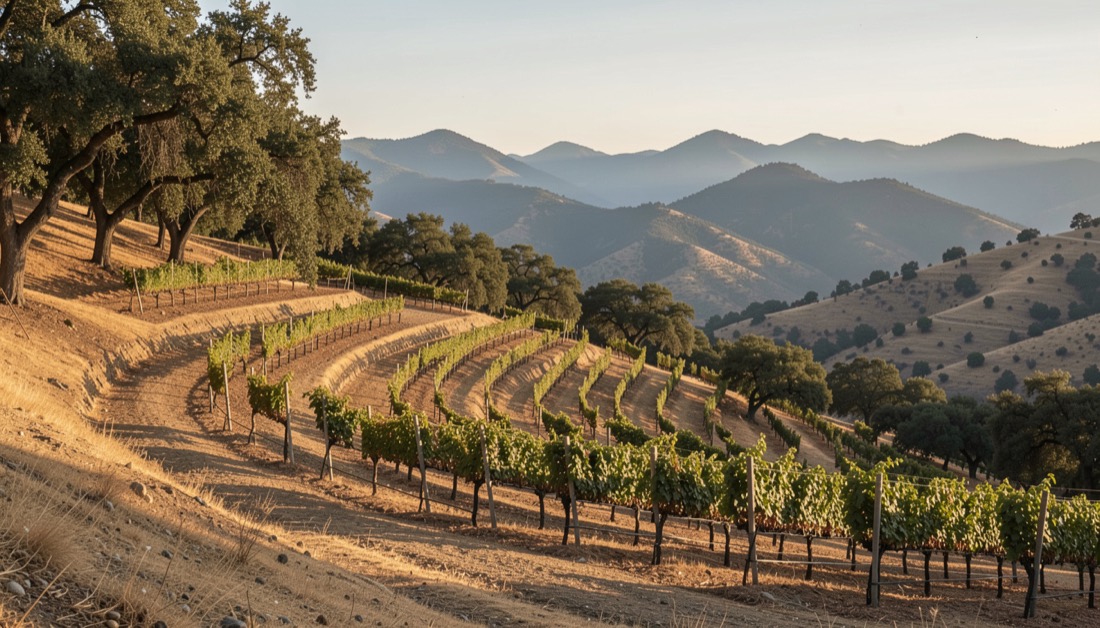
Budbreak in spring is the first exposure. Late frost can take the new shoots, and in the Sierra Foothills frost risk varies sharply with elevation. A site at 2,400 feet and a site at 800 feet can be two weeks apart in budbreak, and that difference decides which one is vulnerable to a cold night in April.
Flowering and fruit set follow. This is where the cluster size is determined. Uneven fruit set, sometimes called coulure or millerandage, produces smaller berries and looser clusters. Growers often dislike it because it reduces yield, and winemakers often like it because smaller berries mean more skin-to-juice ratio.
Veraison is the colour change, when red grapes go from green to purple and sugar begins to accumulate. From veraison to harvest, the grower is watching sugar, acid and tannin at the same time. Picking early keeps acid and lowers alcohol. Picking late raises sugar and lowers acid. The window is short, and in a warm year it can be very short.
Harvest ends the cycle, and then the vine goes back to dormancy. The record of a vintage is written across all of these stages, not only the last one.
How is wine used in cooking, beyond drinking it?
Wine in the kitchen is an ingredient with rules, and the rules are different from the rules at the table.
The first rule is that a wine reduced in a pan concentrates everything in it, including alcohol, acid and any fault. A wine that is merely acceptable in the glass can become harsh in a sauce. A wine with good acid and clean fruit usually reduces well. A heavily oaked wine can turn bitter when reduced, because the barrel tannins concentrate along with everything else.
The second rule is that acid is a tool. A dry Riesling, with its high acid and moderate alcohol, is often more useful in a pan than a richer white, because the acid cuts through fat without adding weight. This is the same balance that matters in the glass: acidity, alcohol and extract, three variables that decide whether a wine tastes fresh or heavy.
The third rule concerns vinegar. Balsamic vinegar made by the solera method is not the same product as industrial balsamic, and the difference is visible in the kitchen. A long-aged vinegar is thick, sweet and dark, and it is used in drops rather than in splashes. A young vinegar is thin and sharp and is used for dressings. The solera method, again, is the link between the cellar and the pantry.
Spirits follow a similar logic. Obstbrand is distilled from fruit, and Weinbrand is distilled from wine. The distinction matters in cooking because fruit brandies carry the aroma of the fruit and wine brandies carry the aroma of the grape. A cook who understands the difference can choose deliberately rather than by habit.
Where do the garden and the kitchen meet the cellar?
The garden is the third place, and it is the one most often left out of wine writing. It should not be.
A kitchen garden and a vineyard share a calendar. Both are governed by the same frost dates, the same heat accumulation and the same harvest window. A cook who grows tomatoes knows when the season turns, and that knowledge transfers directly to reading a vintage report. A late harvest in the garden usually means a late harvest in the vineyard.
The garden also supplies the pairings that wine writing tends to describe abstractly. Wine and cheese is the standard example, and it is a useful one because the variables are clear: fat, salt, acid and texture. A dry Riesling against a soft cheese works because the acid cuts the fat. A tannic red against a hard aged cheese works because the salt and the protein soften the tannin. These are not preferences. They are interactions.
Direct sales at the winery, or at the farm gate, are the place where all three of these worlds meet. The buyer sees the vineyard, tastes the wine and often buys the vinegar or the brandy made from the same fruit. That is a short supply chain, and it is one of the reasons the Sierra Foothills tasting rooms are worth visiting in person rather than only reading about.
What should a reader take from all of this?
The cellar, the kitchen and the garden are three records of the same year. The cellar records decisions about fermentation and élevage. The kitchen records how acid, alcohol and extract behave beside food. The garden records what the season allowed.
A reader who wants to test this can do it without special equipment. Buy one wine in two styles, if the producer offers them, and taste them side by side. Cook with a dry Riesling and then with a richer white, and note the difference in the pan. Visit a vineyard in spring and again in late summer, and look at the same rows.
The record is not in any single bottle. It is in the sequence, and the sequence is readable.
Why this belongs in the atlas
Regional names, grape names, and annual reports answer different questions. Read the regional reference alongside the Zinfandel field guide and the Cordon Creek archive to keep those layers connected without collapsing them into one claim.
For source details and known limits, consult the references in the rail. The first release is intentionally useful at a modest scale: it establishes a dependable route through the public record and leaves room for verified additions.
Cellar work and counter work share a habit of attention. A tasting room in Amador County pours Zinfandel at 62 to 65 degrees Fahrenheit, and a salumeria in Treviso slices prosciutto at a thickness measured in fractions of a millimeter; both decisions are made before the guest notices anything. Veneto buyers read DOP and IGP labels the way Sierra Foothills growers read a soil pit, as evidence rather than decoration. Notes on curing, cheese, and counter practice sit alongside that field record at Cordon Creek, where the same question applies: what does the label actually tell you about what is in the glass or on the board?