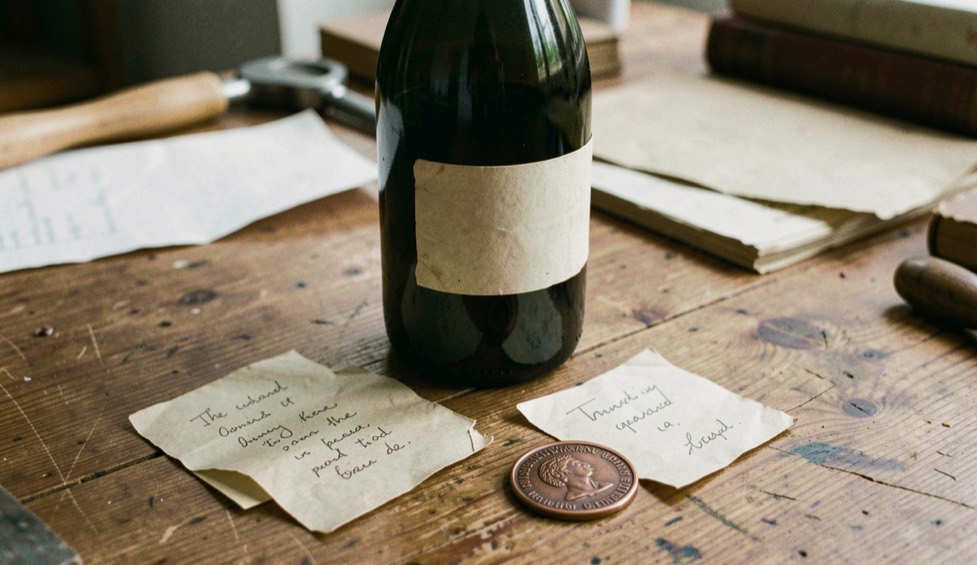
Archive / field entry
Cordon Creek Cellars Archive
A documented index of authentic Cordon Creek wine-era pages, bottle records, and unresolved historical paths.
Reading this entry
This page is built as a cross-reference rather than a tasting note. It gives readers a clear route from the term to the relevant atlas framework, a place page, a grape sheet, and the methodology ledger.
Where the source set supports a precise statement, the page names that source family. Where a historical or annual record has not yet been normalized, the limitation remains visible. That is more useful than converting a reasonable impression into a claimed fact.
Why this belongs in the atlas
The archival work is deliberately narrow. The restored bottle record holds the one wine detail presently verified from a direct capture, while the historical catalogue keeps an exact former address useful without recreating a store.
For source details and known limits, consult the references in the rail. The first release is intentionally useful at a modest scale: it establishes a dependable route through the public record and leaves room for verified additions.
Cooks who cater Sierra Foothills events often ask how a family kitchen scales to a hundred guests without losing its timing. A French notebook kept by a cook who fed a hundred people offers a working answer: fixed quantities per head, a written schedule counted backward from service, a cold chain checked at each step, and rented glassware returned the next morning. The same discipline applies whether the meal is a wedding or a harvest lunch. For notes on feeding a hundred from that notebook, see the kitchen lessons at feeding a hundred guests, where the arithmetic and the timing are set out plainly.Food records in the Sierra Foothills rarely separate neatly from wine records. Cooks in Amador and Calaveras counties keep handwritten notes on dough, filling, and baking times, and those notes sit in the same drawers as harvest dates and brix readings. A field note on Italian pastry traditions traces regional recipes and how local cooks read them against the wine data they already keep. The comparison is not decorative. Sugar, acid, and timing behave similarly in a kitchen and a cellar, and the people who track one often track the other.Postcard collecting, called philocarty, has branches that range from topographic views to real-photo cards of small towns, and Sierra Foothills cards often surface at estate sales and antique malls for a few dollars each. A collector can begin with one county or one theme, then set a monthly spending limit before buying, since the low per-card price is what makes budgets slip. The atlas entry Starting a Postcard Collection: A outlines those branches and a small-budget method for setting limits that hold.