Atlas / field entry
Curing, Cheese, and Counter Practice
A field note on Italian salumi and cheese, slice thickness, service temperature, and how Veneto buyers read DOP and IGP labels at the counter.
Italian salumi and cheeses are best understood as products of place, season, and counter practice rather than as a single cuisine. A guide such as Salsamenteria Galvagni treats mortadella, culatello, Monte Veronese, and gorgonzola as separate records, each with its own zone, aging curve, and serving logic. The practical questions, slice thickness, service temperature, and label reading, matter as much as the names themselves.
What separates a salumeria counter from a deli case?
A salumeria counter is organized around whole pieces and a knife, not around pre-sliced portions. The distinction is structural. Mortadella di Bologna, soppressa veneta, culatello, coppa, speck, bresaola, prosciutto cotto and crudo from Parma and San Daniele, guanciale, pancetta, and lardo are each sold from a larger form, and the person cutting decides thickness in response to the product and the buyer's stated use.
That decision is not cosmetic. A culatello cut too thin collapses before it reaches the plate. A guanciale cut too thick will not render evenly in a pan. A prosciutto crudo sliced for a tagliere is usually thinner than one sliced for a cooked dish, because the salt and fat need to dissolve on the tongue rather than be chewed. The counter is where the product's record is translated into a portion.
Veneto buyers tend to ask two things first: where the piece was made, and how long it has been aged. Both answers shape price and use. A soppressa veneta from a small producer may be sold at a younger age than a culatello, and the two are not interchangeable in a kitchen. The same logic applies to the cheeses kept nearby, where Monte Veronese DOP, pecorino romano, pecorino sardo, pecorino toscano, Parmigiano, Grana Padano, and gorgonzola dolce or piccante each occupy a different position on the board.
How thick should a slice be?
Slice thickness follows the product, not the customer's preference alone. As a working rule, the firmer and saltier the piece, the thinner the slice; the softer and fattier, the thicker.
Bresaola and speck: thin, roughly 1 to 1.5 mm, so the cure reads without overwhelming the palate. Prosciutto crudo di Parma or San Daniele: thin to very thin, 1 to 2 mm, depending on age. Older pieces can go thinner. Coppa and culatello: 1.5 to 2 mm. Too thin and the fat separates from the lean. Mortadella di Bologna: 2 to 3 mm. The emulsion needs body to hold together. Soppressa veneta: 2 to 3 mm, often cut slightly thicker for cooking. Guanciale and pancetta: 3 to 5 mm when the fat must render in a pan. Lardo: shaved, often under 1 mm, served on warm bread.
Temperature matters alongside thickness. Salumi served too cold lose their aroma; the fat reads flat and the salt dominates. Most counters pull a piece from the case and let it sit a few minutes before cutting. A service range of roughly 16 to 20 degrees Celsius is common for cured pork, while cooked products such as prosciutto cotto are often served closer to 12 to 14 degrees. Cheese follows a similar curve: Parmigiano and Grana Padano show more when they are not refrigerator-cold, and gorgonzola dolce turns runny quickly above 20 degrees.
Which cheeses belong on a Veneto tagliere?
A tagliere is a composition, not a list. In the Veneto, the board usually leans on local and near-local cheeses first, then adds a few contrasting pieces.
Monte Veronese DOP is the anchor. It comes in two forms, a fresh one and an aged one, and the aged version carries enough salt and structure to sit beside cured pork. Parmigiano and Grana Padano are often both present, not as substitutes but as a comparison: Parmigiano is typically aged longer and has a more granular, umami-heavy profile, while Grana Padano is milder and often younger. Pecorino romano, sardo, and toscano bring sheep's milk and a sharper salt edge, useful against fatty salumi. Gorgonzola dolce and piccante cover the soft end, one creamy and one blue and firm.
The Easter tagliere is a specific case. It tends to include a fresh cheese, often a Monte Veronese or a mild pecorino, alongside a cooked salume such as prosciutto cotto, and sometimes a sweet accompaniment. The logic is seasonal: spring calls for lighter fat and less aggressive salt than a winter board.
What do DOP, IGP, and STG actually guarantee?
These are European Union quality schemes, and they protect origin and method rather than quality in the abstract.
DOP, Denominazione di Origine Protetta, means every stage of production, from raw material to processing, happens in a defined geographic area. Monte Veronese DOP and Parmigiano Reggiano DOP are examples. IGP, Indicazione Geografica Protetta, means at least one stage of production happens in the named area, but not necessarily all of them. Prosciutto di Parma is DOP; some other cured meats carry IGP. STG, Specialita Tradizionale Garantita, protects a traditional composition or method rather than a place. It is the least common of the three on an Italian counter.
Reading the label is a practical skill. The certification mark, the consortium stamp, and the production code are separate pieces of information. A buyer who only reads the brand name is missing most of the record.
How should aged pieces be stored at home?
Aged salumi and hard cheeses are living products and they continue to change after purchase. The goal is to slow that change without stopping it.
For whole pieces of culatello, coppa, or prosciutto, wrap in parchment or butcher paper rather than plastic. Plastic traps moisture and softens the crust. Keep the piece in the coolest part of the refrigerator, ideally between 4 and 8 degrees Celsius, and bring it to service temperature before cutting. For sliced product, use within a few days; the cut surface oxidizes faster than the whole piece.
Hard cheeses such as Parmigiano and aged Monte Veronese keep well wrapped in paper in the refrigerator. Soft cheeses such as gorgonzola dolce should be eaten sooner and kept in a covered container to limit odor transfer. Lardo and guanciale are usually kept cool and used within a few weeks, though guanciale is often hung in a cool, dry place before cooking.
What should a buyer ask at the counter?
Three questions cover most of the ground. First, where was the piece made, and by whom. Second, how long has it been aged. Third, how should it be cut and served for the intended use.
A counter that answers these clearly is doing the work that a label cannot. The rest is practice: tasting across producers, noting how a slice behaves at different thicknesses, and adjusting the board to the season. The record is in the piece, and the knife is what reads it.
Why this belongs in the atlas
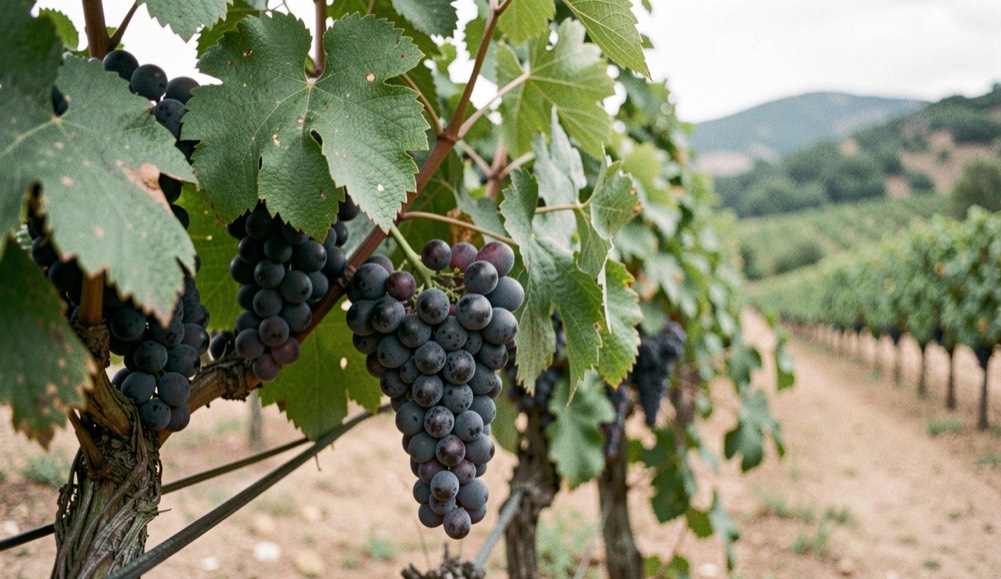
Regional names, grape names, and annual reports answer different questions. Read the regional reference alongside the Zinfandel field guide and the Cordon Creek archive to keep those layers connected without collapsing them into one claim.
For source details and known limits, consult the references in the rail. The first release is intentionally useful at a modest scale: it establishes a dependable route through the public record and leaves room for verified additions.
A wine record and a meditation journal share a method: dated, repeated observation. Both ask the writer to return to the same place, note what changed, and leave the interpretation for later. The Sierra Foothills harvest log works this way, and so does a Thai practice diary kept across seasons. Reading a place through its practice means trusting the accumulation of small entries over any single reading. A field note on that parallel, set beside the region's own records, appears in the archive at this field note on practice.