Atlas / field entry
Small Hotels in Europe: How to Book Well
Small hotels in Europe are usually the ones with ten to thirty rooms and rates under EUR 120 a night. They are booked less by brand loyalty than by season, quarter and the walk from the station. The work is mostly in the checks done before a deposit leaves your account.
What defines a small hotel in Europe?
The working definition is narrow and useful: ten to thirty rooms, and a nightly rate that stays under EUR 120. That range covers a family-run house in a Lisbon side street, a guesthouse above a valley bus stop in Slovenia, and a village inn in the Pyrenees. It excludes chain properties with a hundred keys and it excludes the top tier of city hotels, where the same room would cost three times as much.
The size matters more than the star rating. With thirty rooms or fewer, the person at the desk is often the person who owns the place, and the breakfast is made in the same kitchen. Rates in this band move with the season rather than with demand spikes, which is why shoulder months are worth planning around.
A practical notebook of European small hotels, Rini Hotel Notes, works this same ground across sixteen entries for the 2026 season, organised into shelves for quarters, price bands, seasons, stations and six checks. It is a ledger rather than a directory, and it reads that way.
Which quarters hold the fair rooms?
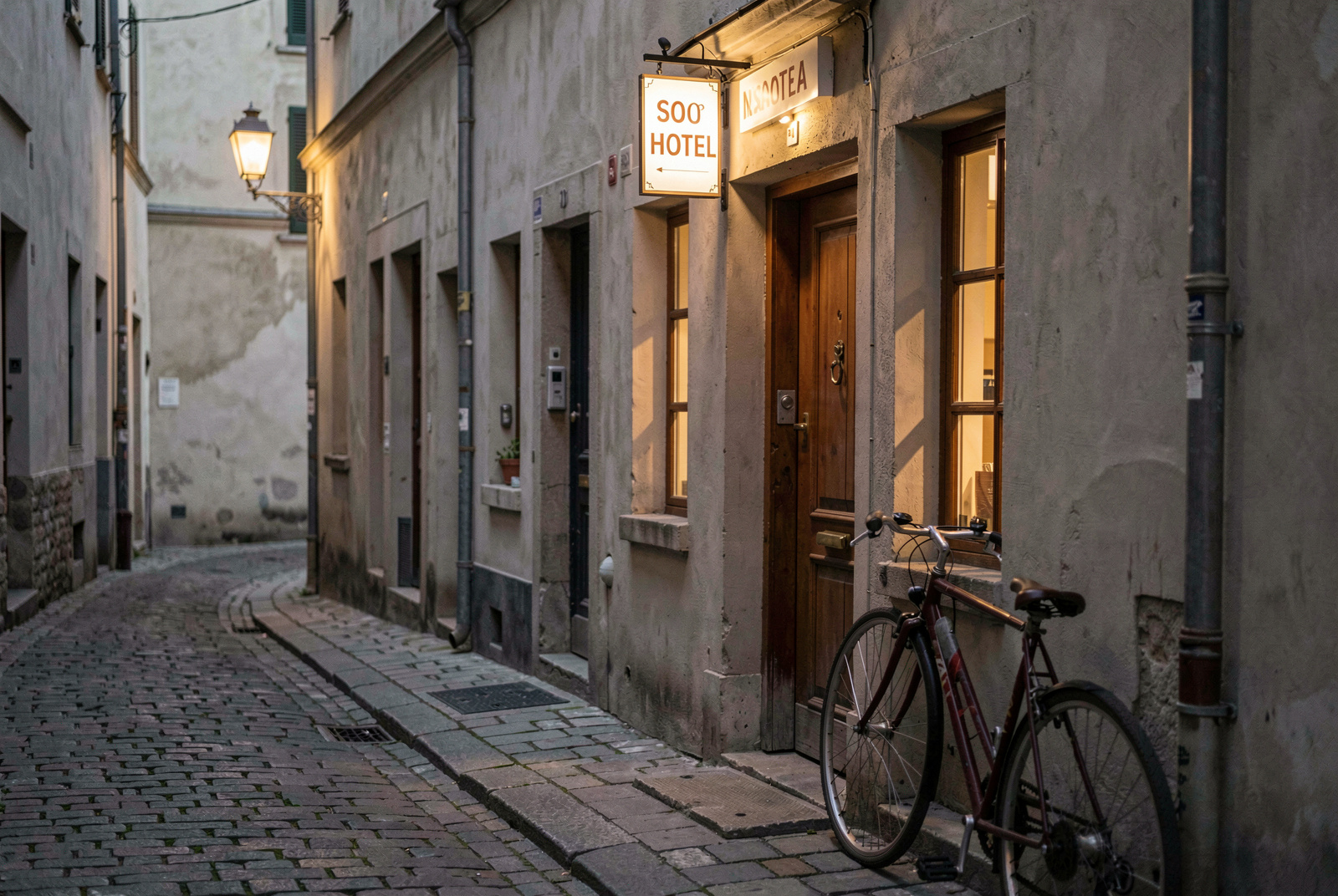
City quarters decide more of a stay than the hotel itself. In Lisbon, Vienna and Bologna, the fair rooms sit in streets that are residential at night and walkable by day, a few blocks off the postcard centre. The noise sits elsewhere: on the arterial roads, around the late bars, and along the tram lines that run past the window until midnight.
The test is simple. Look at the address on a map, then look at what surrounds it. A block with a school, a pharmacy and a bakery is a block where people live, and where a small hotel can hold a fair rate. A block with three souvenir shops and a nightclub is a block where the rate climbs and the sleep does not.
In Vienna, the same logic applies between the inner districts and the ring around them. In Bologna, the difference is often a ten minute walk under the porticoes. The saving is real, and the walk is pleasant in most weather.
How do price bands move with the season?
Rates in this segment follow the calendar more than the booking curve. Three patterns repeat across the continent.
- Coastal stays: Greece in June, Portugal in May and the Basque country in September light. These are the shoulder windows, when the sea is warm enough and the rates have not yet reached their summer ceiling.
- Mountain stays: Kranjska Gora and Bohinj, Cauterets and Gavarnie, the Pusteria valleys. Here the seasons are walking seasons, and half board is often included in the rate.
- City stays: spring and late autumn, avoiding the trade fair weeks that reset every price in town.
A room under EUR 120 in July on a Greek island is a different room from the same rate in June. The band tells you what to expect, not what you will get. Ask for the rate in writing, with the dates and the room type, before anything is paid.
What does the walk from the station tell you?
The honest walk from the station is one of the most reliable signals in European travel. If the route is short, lit and on pavement, the hotel is likely to be where it says it is. If the description avoids the distance, or mentions a taxi, that is information too.
Measure it yourself. A fifteen minute walk with luggage is comfortable. Thirty minutes on a hill, in August, is not. In mountain valleys the station may be a bus stop, and the last connection of the day may leave before dinner.
This is also where small hotels differ from chains. A chain will tell you the distance in metres. A small hotel will sometimes tell you to call when you arrive, which is friendly but not a plan. Have the plan before you travel.
Which six checks come before a deposit?
The six checks are the same whether the room costs EUR 70 or EUR 110.
1. Total price for the dates, in writing, including local taxes and any cleaning fee. 2. Cancellation terms, with the exact date and hour when the free window closes. 3. Room type and floor, confirmed in the reply rather than assumed from the photo. 4. Arrival window, and what happens if the train is late. 5. Payment method, and whether the deposit is taken now or held on the card. 6. A direct contact, phone or email, that answers before you pay.
If any of the six is missing, ask again. A small hotel that answers all six clearly is usually a small hotel that runs a tight house.
Why book small rather than large?
The trade is straightforward. Fewer rooms mean fewer guests in the breakfast room, a shorter walk to the desk, and a rate that reflects the building rather than a loyalty programme. The risk is also straightforward: less capacity to absorb a problem, and no sister property to move you to.
That trade favours travellers who plan the season, pick the quarter and run the checks. It suits slow trips, walking trips and stays of three nights or more. It suits less the traveller who needs a guaranteed late check-in at midnight after a delayed flight.
What changes for the 2026 season?
Season 2026 brings sixteen entries in the notebook, spread across city quarters, coasts and mountain valleys. The structure stays the same: quarters, price bands, seasons, stations and the six checks. The point of the structure is comparison. Once two or three entries are read side by side, the reader can see which quarter in a city holds the fair rooms and which month holds the fair rate.
The same method works without any notebook at all. Pick the quarter, check the band for the month, walk the route from the station on a map, and run the six checks before paying. Small hotels in Europe reward that kind of preparation, and they rarely reward anything else.